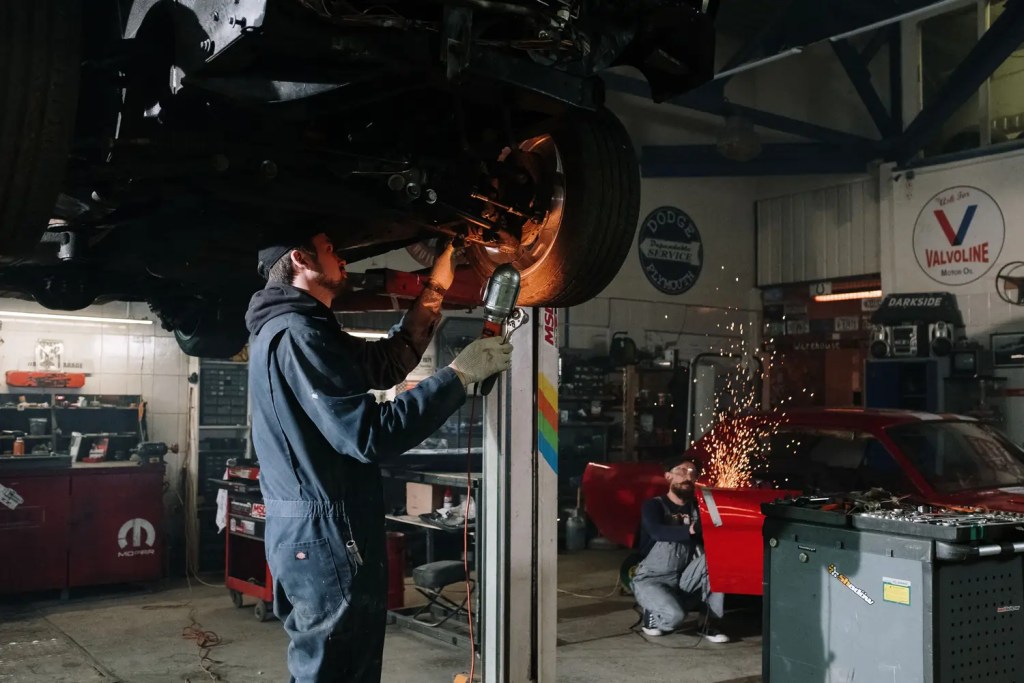
Finding and retaining qualified technical staff has shifted from an operational hurdle to a structural risk for Australian automotive enterprises. Across Australia, independent repairers, multi-franchise dealerships, heavy equipment networks, and transport fleet operators are facing an unprecedented operational bottleneck. Vehicles are spending longer in service bays, workshop throughput is capped, and customer satisfaction metrics are under strain, not due to a lack of commercial demand, but because there are simply not enough qualified hands on the workshop floor. While local apprenticeship intakes remain a core pillar of long-term planning, their multi-year lead times cannot resolve the immediate commercial pressures facing modern workshops.
To maintain operational continuity and support commercial scale, forward-thinking enterprises are looking beyond traditional domestic recruitment. Utilising the Australian immigration framework has evolved into an essential, business-critical human resources strategy. However, relying on overseas talent requires a comprehensive understanding of evolving immigration policies. With significant legislative overhauls taking effect in 2026, including structural shifts in temporary work frameworks, tighter compliance checks, and indexed salary benchmarks, understanding the mechanism of an automotive sponsorship visa Australia 2026 is vital for protecting your enterprise from disruption.
The Structural Reality of the Motor Trades Shortage
The scarcity of skilled trade professionals in the automotive sector is a long-term economic challenge corroborated by extensive public data. According to recent reports from Jobs and Skills Australia (JSA) and the Australian Bureau of Statistics (ABS), automotive trades represent some of the most persistent skill shortages nationwide. The data classifies primary roles such as light motor mechanics, diesel fitters, and automotive electricians under severe, long-term training gap categories. This indicates that the domestic educational pipeline is unable to keep pace with industry attrition and the accelerating complexity of modern vehicle fleets.
This structural pressure is driven by three distinct factors:
- Technician Attrition:A significant volume of senior, trade-qualified professionals retiring out of the workforce, leaving a knowledge gap that cannot be instantly backfilled by junior apprentices.
- Technological Evolution:The rapid introduction of hybrid, battery electric vehicles (EVs), advanced driver-assistance systems (ADAS), and heavy transport telematics requiring specialized training that outpaces standard vocational frameworks.
- Inter-industry Competition:Sustained infrastructure development and resources sector expansions consistently absorbing heavy diesel mechanics, thereby draining the available talent pool for suburban automotive dealerships and metropolitan fleet operators.
Consequently, the standard domestic recruitment cycle of advertising vacancies, adjusting local salary brackets, or engaging standard employment agencies is no longer yielding sufficient numbers of trade-qualified applicants. For multi-site workshops and major dealer groups, a single unfilled bay represents tens of thousands of dollars in foregone weekly revenue. This data-backed shortage underlines why an automotive skilled visa Australia framework has moved from a reactive emergency measure to a proactive, multi-year workforce strategy.
Eligible Automotive Roles Under the Core Skills Framework
The administrative architecture for employer-sponsored migration is anchored in the Core Skills Occupation List (CSOL), which provides the definitive baseline for employer sponsorship under the temporary skilled migration framework. For businesses looking to sponsor mechanic Australia pathways or onboard technical specialists, the nominated occupation must align explicitly with ANZSCO classifications verified on this list.
The primary technical roles eligible for sponsorship under the standard Core Skills stream include:
- Motor Mechanic (General) [ANZSCO 321211]:Responsible for standard passenger vehicles, light commercial fleets, and mechanical diagnostics.
- Diesel Motor Mechanic / Heavy Equipment Specialist [ANZSCO 321212]:Essential for heavy transport logistics, agricultural machinery, earthmoving fleets, and civil construction machinery.
- Automotive Electrician [ANZSCO 321111]:Focusing on electronic fuel injection, complex wiring harnesses, vehicle diagnostic systems, integration of hybrid battery systems, and ADAS calibration.
- Panel Beater [ANZSCO 322211] and Vehicle Painter [ANZSCO 322411]:Crucial for commercial repair networks, structural crash diagnostics, and high-volume fleet refurbishment.
Regulatory Note on Position Genuineness: To successfully nominate a worker under these classifications, an enterprise must demonstrate that the position is genuine, sits within the core scope of the business, and that the prospective candidate holds a trade qualification equivalent to an Australian Certificate III or IV, alongside a minimum period of relevant post-qualification experience.
Financial Compliance: Salary Thresholds and Award Rates
A fundamental pillar of maintaining a compliant motor trades shortage visa program is adhering to strict remuneration frameworks. The Australian Government implements a dual-layered assessment mechanism designed to protect the integrity of the local labour market and prevent the exploitation of overseas workers. Sponsors must satisfy two distinct financial requirements simultaneously at the nomination stage and throughout the visa duration: the Core Skills Income Threshold (CSIT) and the Annual Market Salary Rate (AMSR).
The 2026 Core Skills Income Threshold (CSIT)
The Core Skills Income Threshold acts as a non-negotiable statutory salary floor. Reflecting the federal government’s indexation framework aligned with Average Weekly Ordinary Time Earnings (AWOTE), the minimum salary threshold is confirmed at $79,499 per annum, effective 1 July 2026. This figure represents a significant upward shift from prior years.
Crucially, this amount must comprise guaranteed annual earnings. Employers cannot include non-guaranteed overtime, variable performance bonuses, tool allowances, or discretionary workshop productivity incentives to artificially meet the $79,499 statutory baseline. Superannuation is calculated in addition to this base threshold.
The Annual Market Salary Rate (AMSR) and Award Alignment
Meeting the $79,499 statutory floor is only the first step. Under immigration regulations, employers must also prove that the salary offered matches the Annual Market Salary Rate (AMSR)—meaning what an equivalent Australian citizen or permanent resident is paid to perform identical work in the same location. If your workshop pays local senior mechanics $85,000 per annum, the sponsored overseas technician must be paid at least $85,000, not the regulatory minimum of $79,499.
For the automotive sector, this calculation interacts directly with the Vehicle Repair, Services and Retail Award 2020. While the award base rates for a standard Trade Qualified Mechanic (typically a Level II or Level III under the award classification) sit below the statutory immigration threshold, market pressures mean actual market wages are frequently higher. Sponsors must provide concrete market evidence—such as local employment contracts, detailed internal payroll data for existing staff, and transparent regional job advertisements—to justify that the salary package complies with both the award and current market parameters. Failing to benchmark this correctly can lead to prompt nomination refusals by the Department of Home Affairs.
Step-by-Step Sponsorship Walkthrough for Automotive Employers
Transitioning an offshore candidate or an onshore visa holder onto an automotive industry 482 visa requires a methodical, three-tiered legal process. A mistake at any stage can result in significant processing delays, lost application fees, and operational disruption.
Step 1: Standard Employer Sponsorship (SES)
Before nominating any individual, the business must apply for and be approved as a Standard Business Sponsor. This requires demonstrating that the company is a lawfully operating enterprise with clean financial records, standard business registrations (ABN/ACN), and an explicit commitment to local employment and training. Once approved, sponsorship status is generally valid for five years, allowing the company to sponsor multiple skilled automotive workers Australia-wide during that window.
Step 2: Position Nomination
The nomination phase focuses directly on the specific role within the workshop. The business must prove that the position is a genuine operational requirement, verify that the role matches the correct ANZSCO code on the CSOL, and satisfy the financial benchmarks (CSIT and AMSR). Furthermore, employers must undertake mandatory Labour Market Testing (LMT), demonstrating they have advertised the role locally within required timeframes and platforms, and were unable to find a suitable domestic candidate.
Step 3: The Visa Application
The final phase belongs to the prospective employee. The technician must submit a formal visa application demonstrating they possess the requisite qualifications, verified employment references, relevant health insurance, and meet mandatory character and English language benchmarks. For specific source countries, candidates must successfully clear a formal Skills Assessment administered by Trades Recognition Australia (TRA) before a visa can be granted.
Long-Term Success: Retention and Permanent Residency Pathways
Sourcing a trade-qualified professional is only half the battle; ensuring long-term operational consistency requires a focused focus on employee retention. Within the current immigration architecture, temporary employer-sponsored visas provide direct, predictable pathways to permanent residency—acting as an extraordinary incentive for international technicians seeking long-term settlement.
The primary permanent pathway is the Employer Nomination Scheme (subclass 186) visa. Under the Temporary Residence Transition (TRT) stream, sponsored workers can transition to permanent residency once they have completed a designated period of full-time employment with their sponsoring employer. This mutual stability aligns the employee’s personal goal of long-term settlement with the employer’s goal of workshop operational continuity.
To maximize the return on investment of an international recruitment campaign, automotive sponsors should adopt a cohesive approach integrated around three core pillars:
- Career Progression:Establishing structured professional developmental pathways, onboarding training for advanced diagnostic software, and clear progressions into workshop foreman or service manager positions.
- Immigration Certainty:Engaging technical migration specialists early to design clear, transparent permanent residency pathways, providing workers with certainty regarding their future in Australia.
- Holistic Settlement Support:Recognizing that relocation involves an entire household. Providing assistance with initial local accommodation, community orientation, and navigating regional schooling options significantly reduces transitional friction and enhances retention.
The Rehman Sheriff Group Approach to Strategic Workforce Solutions
Navigating international recruitment and complex legal sponsorship frameworks demands a strategic partner who understands both corporate immigration law and the practical realities of the automotive industry. Rehman Sheriff Group (RSG) provides an end-to-end operational framework that unifies global workforce acquisition, complex legal compliance, and long-term retention management into a single partnership model.
Instead of managing disjointed recruitment agencies and independent legal providers, automotive enterprises partner with RSG to handle the complete lifecycle of international human resources. We identify trade-qualified international technicians, manage the strict legal verification of qualifications, execute compliant Labour Market Testing, and navigate the entire Department of Home Affairs sponsorship framework. Furthermore, our dedicated relocation and settlement protocols ensure that your new technicians arrive ready to work, with all compliance checklists satisfied.
By aligning global talent sourcing with technical immigration precision, RSG transforms skilled migration from a complex legal hurdle into a reliable, repeatable, and scalable engine for your business growth.
Conclusion
The skilled labour shortage across Australia’s automotive repair, dealership, and fleet sectors remains a structural reality that cannot be resolved through local advertising alone. As statutory frameworks shift and salary thresholds index upward to $79,499 in July 2026, maintaining absolute regulatory compliance is critical for any enterprise utilizing international talent. Proactive migration planning ensures your workshop bays remain full, your service lines fluid, and your commercial operations insulated against domestic labor shortages.
To learn how Rehman Sheriff Group can assist your organization in developing a compliant, scalable international recruitment strategy, contact our immigration and workforce procurement team today to arrange a comprehensive operational audit.
Compliance Disclaimer:The information contained within this publication is intended solely to provide a general overview of employer-sponsored migration frameworks in Australia as of June 2026. It does not constitute personalized legal advice, immigration assistance, or a formal legal opinion. Immigration laws, policy guidelines, and occupation lists are subject to frequent regulatory change. Australian businesses and employers should not act or rely on any information contained herein without first obtaining professional, tailored legal counsel from a Registered Migration Agent or a qualified Australian Immigration Lawyer relative to their specific corporate circumstances.