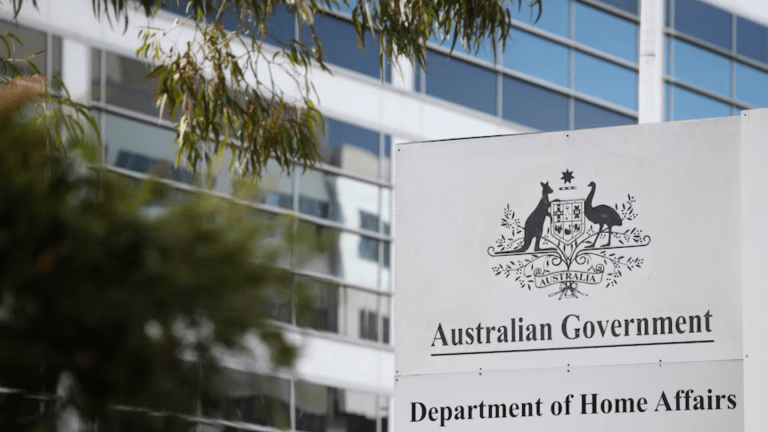
From time to time, the Rehman Sheriff Group (RSG) makes representations to the Government on matters pertaining to Australian Immigration Law. One of RSG’s fundamental aims during this process is to help shape an Australian immigration law system that supports a progressive, cohesive and productive Australia.
In more recent news on the processes of Lobbying in Australia, the Lobbying (Improving Government Honesty and Trust) Bill 2025 (Bill) is at its second reading in parliament. The Bill was introduced for an Act to establish a scheme to promote and enhance transparency, integrity and honesty in dealings between lobbyists and Government representatives, and for related purposes.
With the various events undertaking globally, which could have implications for issues in Australia, the Bill’s importance cannot be undermined to preserve democratic function.
I am writing this publication, and various others to follow, to summarise the lobbying process in Australia. I hope to assist readers to familiarise themselves with some of the common questions around lobbying in Australia.
In later publications to follow, I will touch on the proposed Bill, it’s future implications and current Australian examples where the Bill could be beneficial.
Definition and Scope of Lobbying Activity
Pursuant to the Lobbying Code of Conduct (the Code), lobbying is defined as communications with Australian Government representatives undertaken for the purpose of influencing federal government decision-making. Such decision-making includes, but is not limited to:
- The making or amendment of legislation;
- The development or modification of government policy or programs;
- The awarding of government contracts or grants; and
- The allocation of federal funding.
The Code seeks to uphold public confidence in governmental processes by ensuring lobbying is conducted with transparency, integrity, and accountability.
Certain categories of communication are expressly excluded from the definition of lobbying activity, including:
- responses to formal requests for information from government representatives;
- communications with parliamentary committees; and
- interactions with ministers acting in their local member capacity (see s 5(1) of the Code).
Notably, the Code does not apply to “in-house” lobbyists—i.e., employees who represent the interests of their own employer—on the basis that such representation is sufficiently transparent.
Mandatory Registration Requirements
Any individual or organization engaging in lobbying activities on behalf of third-party clients must be registered in accordance with the Code. This registration requirement applies irrespective of remuneration and regardless of whether the individual self-identifies as a “lobbyist”.
Exempted from registration are:
- religious and charitable institutions;
- not-for-profit organisations and associations;
- individuals advocating on behalf of friends or relatives;
- members of foreign trade delegations;
- professionals regulated under Commonwealth schemes (e.g., tax agents, customs brokers) when lobbying is incidental to core professional services; and
- professionals such as lawyers, doctors, or accountants whose representations to the government are occasional and incidental.
Prohibited Lobbying and Restrictions
The Code establishes clear restrictions on lobbying by former government officials:
Ministers and Assistant Ministers are prohibited from lobbying on matters within their former official portfolio for a period of 18 months post-tenure.
Advisers and senior staff (Members of Parliament (Staff) Act 1984), ADF members (Colonel or equivalent and above), and SES-level public servants are similarly restricted for a 12-month period in relation to matters dealt with during their final year of service.
A lobbyist subject to a prohibition period must declare compliance with that period when initiating contact with government representatives.
Principles of Engagement
Section 12 of the Code outlines five core principles that must be observed when engaging in lobbying activity:
- Representations must be truthful and accurate.
- Conduct must not be corrupt, dishonest, or unlawful.
- Claims must not be misleading or exaggerated.
- Lobbying activity must remain distinct from political party activity.
- Lobbyists must identify themselves as registered representatives, disclose the client’s identity, the purpose of the engagement, and confirm any relevant prohibition period.
Non-compliance with these principles may result in suspension or removal from the Register.
Registration Procedure and Ongoing Obligations
Lobbyists must register via the Lobbyist Register Portal, providing:
- details of the lobbying organization;
- names, titles, and prior government service of lobbyists;
- a list of clients being represented.
Statutory declarations are required at initial registration and every year (by 1 July), confirming that the lobbyist:
- has not been sentenced to imprisonment for 30 months or more;
- has not, within the past 10 years, been convicted of a dishonesty offence;
- is not a member of a political party executive or equivalent body;
- has not committed a serious breach of the Code.
Registrants must update details within 10 business days of any material change (e.g., new client engagement) and submit biannual confirmations (1 February and 1 July). Failure to update may lead to removal from the Register.
Exemption from Client Disclosure
Lobbyists may withhold disclosure of a client on the public Register if such disclosure would reasonably lead to market speculation about a pending, undisclosed transaction. In such cases, lobbyists must still inform the government representative of the nondisclosure and indicate when the client will be disclosed.
Enforcement and Sanctions
Breaches of the Code include, but are not limited to:
- engaging in lobbying activity while unregistered;
- engaging in lobbying while subject to a prohibition period;
- failing to disclose or inaccurately reporting client information;
- failing to adhere to the Code’s principles of conduct.
The Secretary may remove lobbyists from the Register or deny registration for up to three months following a serious breach. The Attorney-General may also direct the Secretary to reject or remove a registration if the lobbyist’s conduct:
- indicates a risk of non-compliance with the Code; or
- would otherwise undermine public trust in government integrity.
The Attorney-General must provide notice and an opportunity for the affected party to respond before issuing such a warning.
Foreign Influence Transparency Scheme (FITS)
Lobbyists are advised to consider whether their activities may also fall within the scope of the Foreign Influence Transparency Scheme Act 2018 (Cth) and register accordingly.