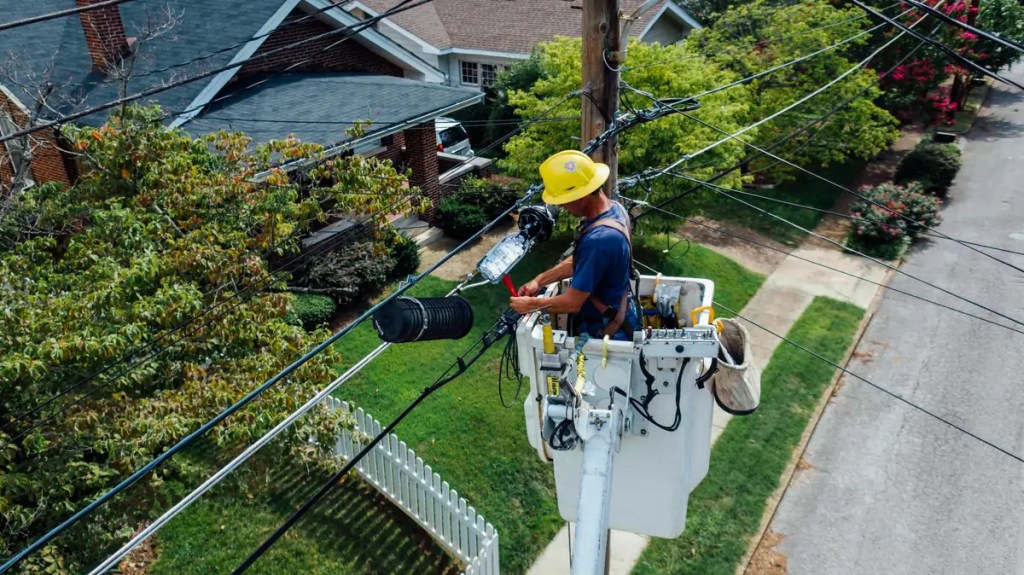
For Australian builders, contractors, and industrial firms, the “labour shortage” has evolved into a structural scarcity of technical expertise. Project managers in the construction and mining sectors frequently report that while they have the capital and the contracts, they lack the boots on the ground to meet deadlines. The difficulty in finding reliable, licensed electricians, plumbers, and mechanics has become the primary bottleneck for infrastructure delivery in 2026.
Traditional recruitment methods are often insufficient to fill these gaps. Local apprenticeship numbers, while growing, cannot immediately offset the high volume of retirements and the sheer scale of current national development. In this environment, the Australian migration system offers a critical pathway, but only for those who understand how to use it as a strategic workforce tool rather than a temporary fix.
At Rehman Sheriff Group (RSG), we view the recruitment of international tradespeople through a long- term lens. Success is not just about a visa grant; it is about finding the right person, ensuring they meet Australian licensing standards, and retaining them within your business for years to come.
Why the Trades Gap Matters Now in Australia
The 2026 migration landscape is defined by the “Essential Skills” framework. The Australian Government has explicitly prioritised trades that contribute to housing supply and critical infrastructure. This prioritisation is reflected in faster processing times and more accessible pathways for regional trades.
However, the bar for compliance remains high. The government’s focus on “Core Skills” means that while it is easier to bring in a plumber or an electrician, the employer must demonstrate a genuine commitment to fair pay and workplace standards. For a business, this means that every international hire must be backed by rigorous documentation and a clear understanding of the $73,150 (TSMIT) or the
$76,000 “Core” threshold requirements.
The 2026 Trades Occupation List: Priority ANZSCOs
The following table outlines the key trades currently in high demand and their typical classification for 2026 sponsorship.
| Trade Occupation | ANZSCO Code | Priority Level | Licensing Requirement |
| Electrician (General) | 341111 | Critical | State-based Licence Required |
| Plumber (General) | 334111 | High | State-based Licence Required |
| Carpenter | 331212 | High | Skills Assessment (TRA) |
| Metal Machinist (First Class) | 323214 | Steady | Industry Certification |
| Motor Mechanic (General) | 321211 | High | Trade Certificate / Licensing |
| Welder (First Class) | 322313 | Steady | Cert III/IV Equivalent |
The $76k Core Threshold and Financial Compliance
One of the most significant changes in 2026 is the implementation of the Core Skills threshold. For most trade sponsorships under the Skills in Demand visa, the annual base salary must meet or exceed the Core
Skills threshold (currently indexed around $76,000) or the Annual Market Salary Rate (AMSR)— whichever is higher.
Understanding the AMSR
Employers cannot simply pay the minimum threshold if an Australian worker in the same role, at the same location, would be paid more. For example, if your local electricians are earning $95,000 plus superannuation, you must pay your sponsored international electrician the same rate. This ensures “parity” and prevents the migration system from being used to undercut Australian wages.
Step-by-Step Sponsorship Guide for Builders and Contractors
For a building firm looking to sponsor tradespeople, the process must be handled with precision to avoid Departmental delays.
1. Standard Business Sponsorship (SBS)
Your business must first be approved as a sponsor. The Department will look at your financial records, your history of employing Australians, and your compliance with Fair Work standards.
2. The Skills Assessment (TRA)
Before a visa is lodged, most tradespeople must undergo a skills assessment through Trades Recognition Australia (TRA). This verifies that their overseas qualifications and experience are equivalent to an Australian Certificate III or IV.
3. Labour Market Testing (LMT)
You must prove that you tried to find an Australian worker first. This requires advertising the role on at least two platforms (including Workforce Australia) for a minimum of four weeks. The ads must be specific and include the salary range.
4. Nomination and Visa Grant
Once the LMT and Skills Assessment are complete, the business “nominates” the position. Once approved, the worker applies for their visa.
Regional Trades: Incentives for Suburban and Rural Firms
Firms operating in regional Australia (which includes almost everywhere except Sydney, Melbourne, and Brisbane) have access to the Subclass 494 (Employer Sponsored Regional) and Subclass 491 (Regional Skilled) pathways. These visas offer:
- PriorityProcessing: Regional applications are moved to the front of the
- BroaderLists: Access to occupations that might not be available for metropolitan
- Pathwayto PR: A clear, three-year pathway to permanent residency, which is a significant retention incentive.
The RSG Model: Beyond the Visa Application
At Rehman Sheriff Group, we recognize that the “visa” is often the easiest part of the journey. The real challenge for trades-based businesses is the logistics and the transition.
- Skills and Labour Acquisition: We source tradespeople from markets with high technical standards(such as the UK, Ireland, Philippines, and South Africa) where the training systems align well with Australian requirements.
- Relocation andLicensing: We assist with the “gap training” often required for electricians and plumbers to obtain their local state licences, ensuring they can work at their full capacity as soon as possible.
- Workforce Retention: We help you structure employment contracts and PR pathways that ensureyour staff stay with you for the long term, protecting your investment in their
Building a Resilient Workforce
The 2026 migration system is a powerful tool for Australian businesses, but it is one that requires professional management. Trust is built when an employer knows their staff are compliant, their licences are valid, and their visas are secure.
By integrating international trades into your workforce through a structured, long-term partnership with RSG, you can move from a state of constant staffing anxiety to one of operational stability. We are committed to helping Australian firms build the infrastructure of the future by securing the talent they need today.
If you are a business owner or HR manager ready to explore a comprehensive trades workforce solution, we invite you to consult with our specialist team.
Compliance Disclaimer: The information provided in this article is for general informational purposes only and does not constitute legal or migration advice. Australian migration law is subject to frequent change, and the eligibility of any individual or business depends on specific circumstances. We recommend seeking professional advice from a Registered Migration Agent or Australian Legal Practitioner before proceeding with a visa application. Rehman Sheriff Group accepts no liability for any loss resulting from reliance on this content.a